
How can sailing improve your team's productivity?
Real-world analogies between sailing and business management: preparation, situational awareness, course changes, hierarchy, communication, change management and continuous improvement.
Published: 2023-08-25 · Author: Navegabacalar
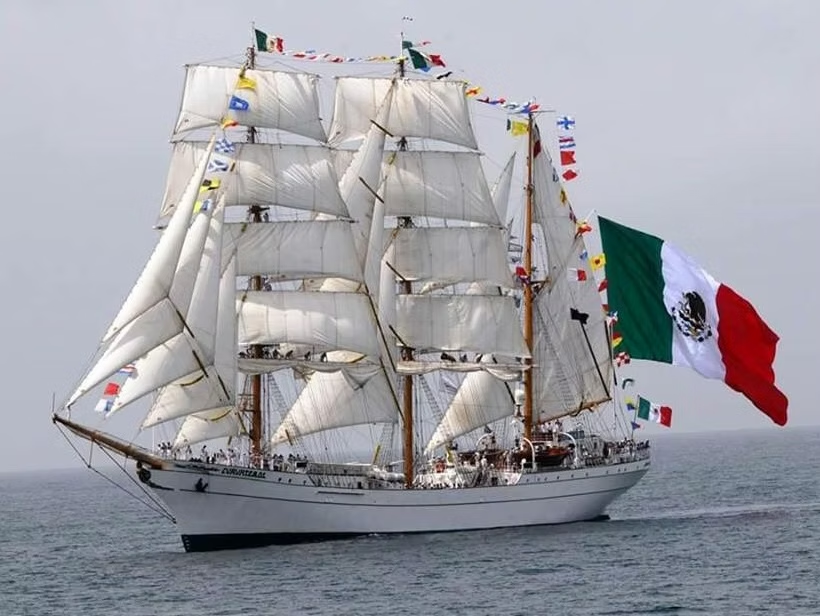
"Coming together is the beginning. Keeping together is progress. Working together is sharing success." — Henry Ford
For more than three decades sailing has been part of my professional work and remains my favourite pastime. I think that's why I've had a happy life — and I've seen first-hand that, aboard a sailboat in particular, you find the ideal setting for sharpening the competitive skills of people who work together. I mean teams of any kind: sports, organisations, or companies — where members share common goals.
Whether you sail as part of a regatta crew, in a teaching session, or simply on a weekend cruise, the collaborative nature of sailing simulates and strengthens the adaptive skills required in this fast-changing, technology-driven world. Other countries have shown this with their nautical cultures, where this kind of training has been successfully introduced at corporate level.
So I set out — as any good Mexican would — to do the same: drawing on business administration, executive leadership and organisational coaching to combine sailing experience with team-building dynamics. These programmes flex around each company's needs: as a corporate incentive for teams that have stood out for their productivity; as business training for groups starting to work together — or needing some fine-tuning in their "machinery"; or as a blend of the two, rewarding and reinforcing team skills at once.
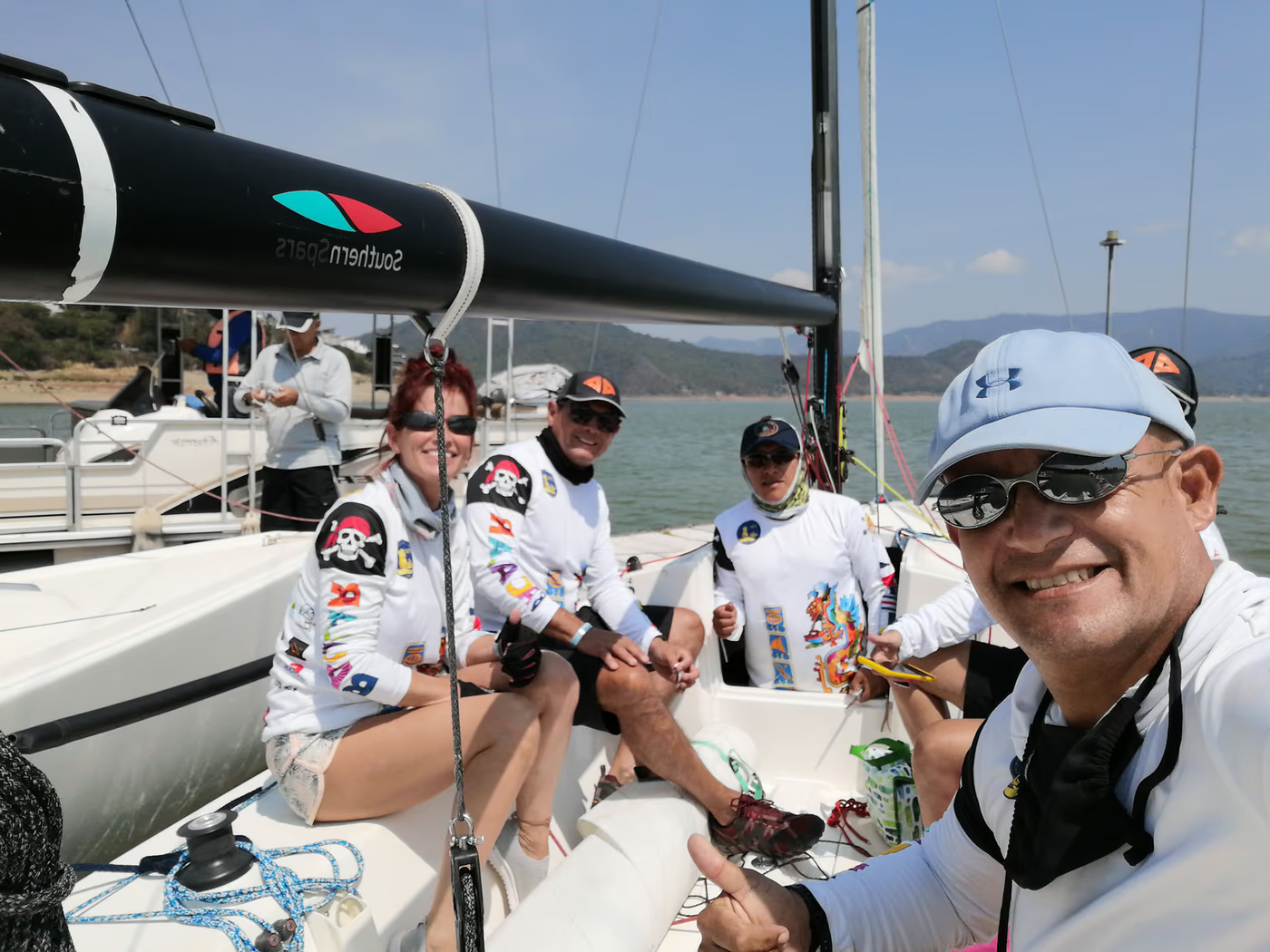
Here are eight key points where sailing converges and shares analogies with the business world.
1. Preparing the boat / planning
Preparing the boat is essential for safety and good performance while sailing. A check-list is a priority so nothing is forgotten — and someone should own the task.
In the company, planning, organising, leading, controlling and learning all require protocols and processes so teams operate in an orderly way to execute their tasks — especially at the start of a project or when a project changes.
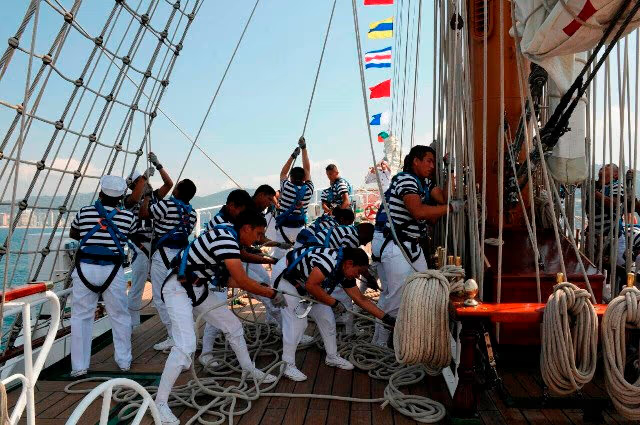
2. Situational awareness / scanning the environment
Staying alert and aware of relevant information (sun, clouds, wind, waves and currents), the boat's current position, and any data on other boats visible on the horizon toward which we are heading. This must always be the priority — supported by instruments like the compass, GPS and radar.
In business, the macro-environment in which the organisation operates calls for sharp, up-to-the-minute knowledge and prior analysis of all the information collected. It also needs continuous monitoring of the key indicators that can affect commercial results — so strategy and tactics can be adjusted.
3. Wind shifts / crisis management
When there's a sudden wind shift or you're sailing in bad weather, what matters is to adjust the course or sail trim — or even stop the boat — to manage the crisis and ensure you can keep moving. Blame isn't assigned: the crew focuses on getting new information to correct the helm and coordinate the sail trim.
In the company, when execution heads in the wrong direction or issues come up, time is often lost in defensive postures instead of brainstorming ways to get back on track and pick up speed. Teams must seek new information and act quickly.
4. Hierarchy on board / chain of responsibility
While sailing, it's essential that the crew has a very clear sense of who is responsible for what — both at the level of broad task divisions and at finer subdivisions — so communication flows in the right direction toward synchronising the manoeuvres that keep the boat on course.
In organisations that work across technical and administrative areas, teams must take into account upward, downward and adjacent functions so process flows stay efficient — always with productivity as the goal.
5. Course changes / change management
When you're about to change course, the crew is briefed on what to do to adjust the sails according to wind direction and speed — the helmsman gets the information and the order in time and properly, avoiding doubt and surprises.
Companies must work on effective change management, grounded in careful preparation, procedure reviews and a backup plan in case new adjustments are needed during the change. All of this must be communicated to the teams responsible for carrying it out.
6. Surprises after setting sail / disruptive thinking
Once you set sail, even with prior planning, surprises happen. The crew must act with only the available resources and their own capabilities — with quick, innovative thinking — exploring multiple options before settling on a final call.
In business, sustainability and progress are constantly threatened by challenges, mild or severe (the recent pandemic showed us so). What's needed is ingenuity and disruptive thinking — not just to stay afloat, but to come back stronger.
7. Onboard instruments / AI and human validation
Onboard instruments complement automation across many sailing tasks. Still, it's wise for the crew to practise every manoeuvre so they can run the boat by hand — especially the emergency systems — anticipating a future failure. Collective crew experience is irreplaceable.
In our era of Big Data and analytics-driven markets, we can't fully rely on machines to drive decisions. Real complications and anomalies require human interpretation and intervention when using AI (artificial intelligence) and ML (machine learning). Hence the importance of validating automated models with human judgement.
8. Windless days / continuous improvement
On windless days you "sharpen the axe": practising manoeuvres, knots, adjustments and cleaning the boat's equipment. Activities that build personal skills and keep the boat ready for when the wind comes back.
In companies, commercial pauses or cyclical lows offer the chance to re-prioritise tasks across departments and teams and to upskill employees — increasing the organisation's competitive advantage and, ultimately, its productivity.
Conclusion
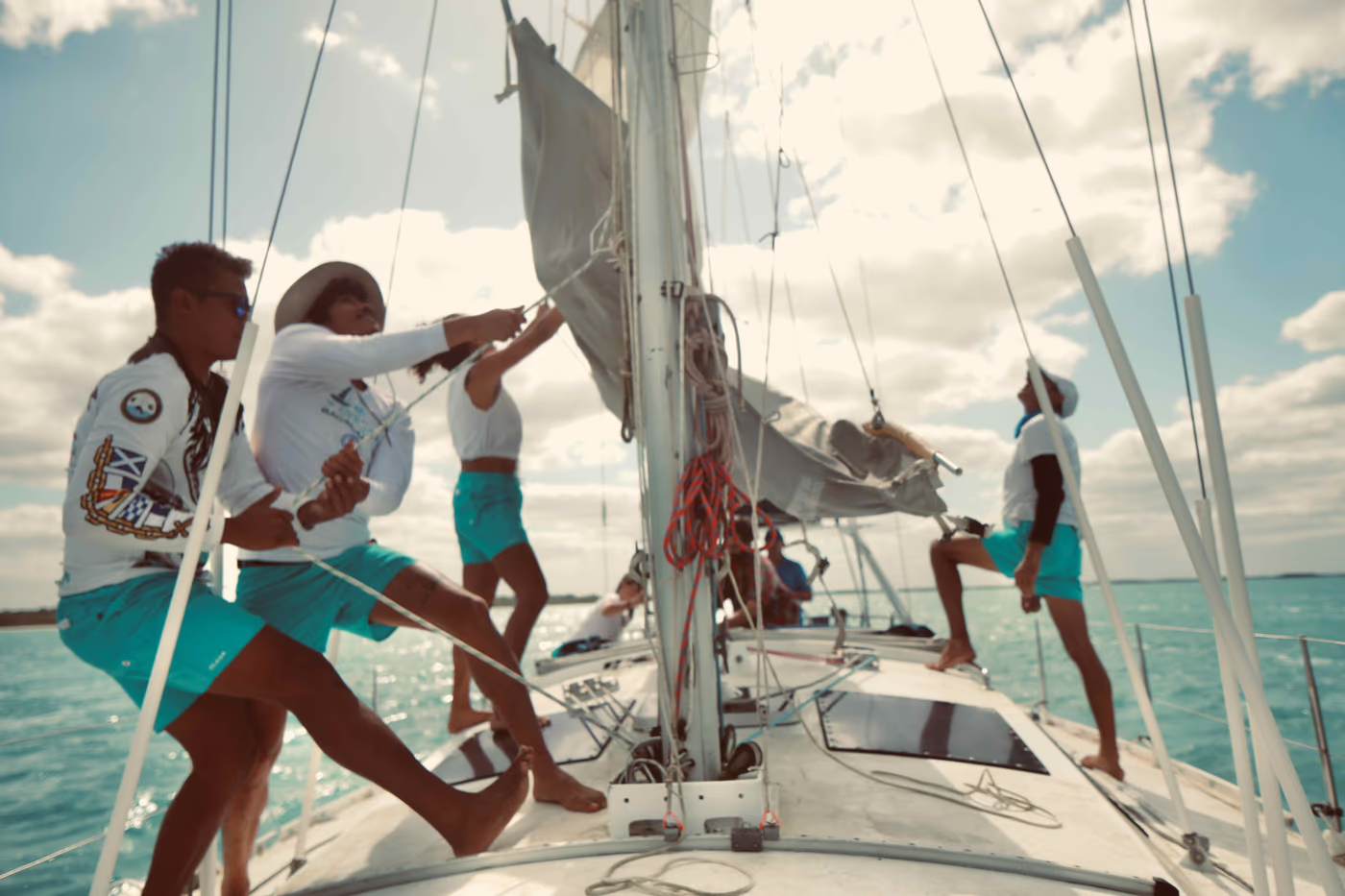
Sailing as a team doesn't only test and bring out the best in our individual selves for collaboration — it also nurtures a mindset of synchronicity and efficient teamwork that, translated to the business world, becomes the skill set that drives organisations and industries toward new opportunities.