
Going sailing in Bacalar? Follow these safety rules
Basic nautical vocabulary and the international (COLREGs) and local (API Bacalar) rules for safe sailing on Laguna de Bacalar.
Published: 2023-08-07 · Author: Navegabacalar
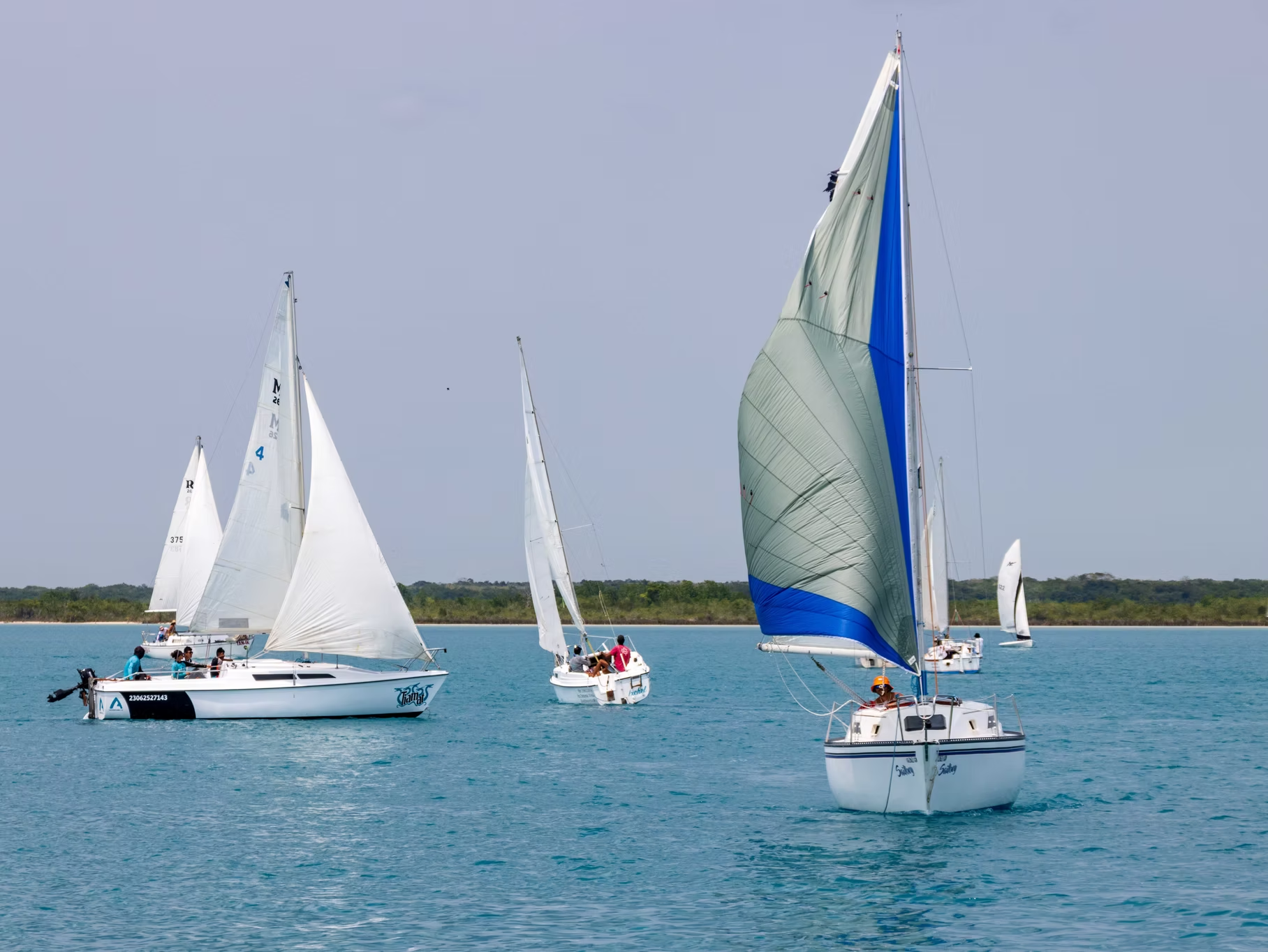
The rules sailboats must follow for safe sailing on Laguna de Bacalar, Quintana Roo.
In this article we look — clearly and concisely — at the rules sailboats must observe. The basis is the International Regulations for Preventing Collisions at Sea (COLREGs / RIPA) and the Bacalar Lagoon Operating Rules (API). In the event of an accident involving damage or injury, insurers and the public prosecutor will rely on these documents to assign responsibility. Every boat skipper must know and respect these international and local rules.
- COLREGs (RIPA):
abordajes.qxd(cameintram.org) - Local operating rules:
Reglas-de-Operacion-Laguna-de-Bacalar.pdf(apiqroo.com.mx)
But first, six essential nautical terms you need to know to interpret the rules according to the boats' movement relative to the wind and to each other.
Six essential terms
- Bow — the front of the boat.
- Stern — the back of the boat.
- Port — always the left side of the boat when facing the bow.
- Starboard — always the right side of the boat when facing the bow.
- Windward — the side of the boat closest to the wind.
- Leeward — the side of the boat opposite the wind.
The rules of the road
The basics of sailing start with being familiar with the essential safety rules. There are different right-of-way rules for sailboats than for motorboats. Although the sea is huge, you'll often run into situations where you have to manoeuvre — and on a lagoon like Bacalar this is daily routine: boats move in a small radius and on similar schedules.
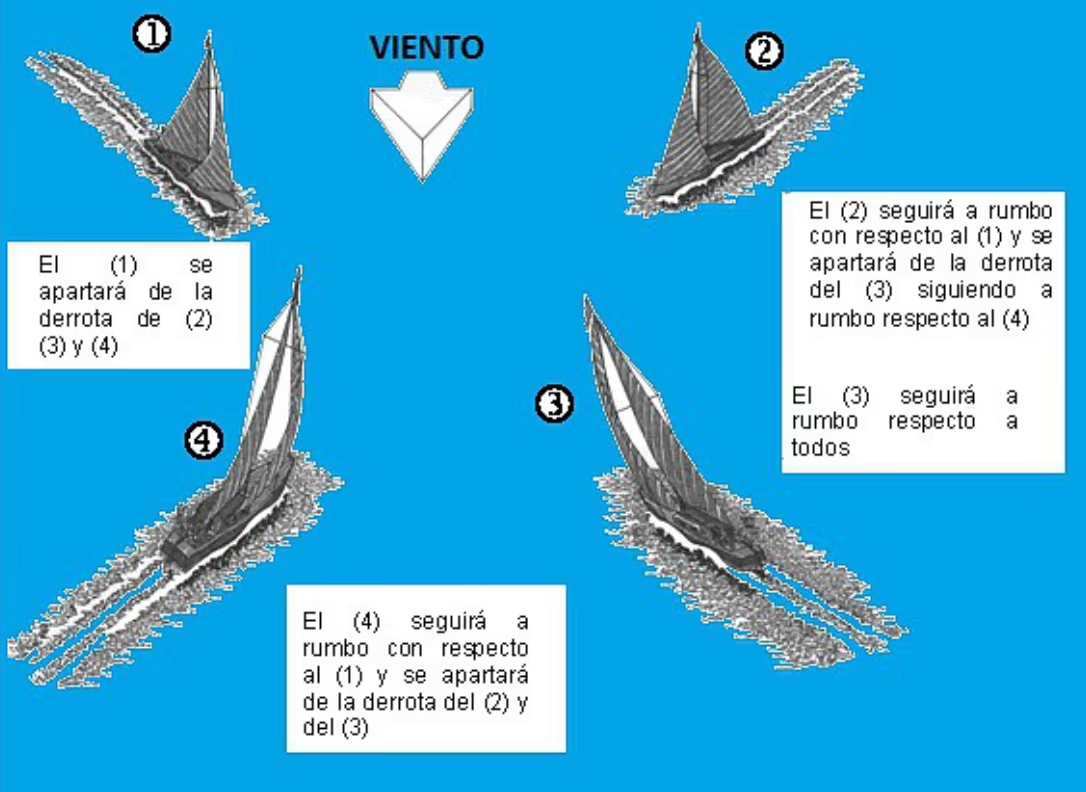
Here's a useful overview of the basic rules:
-
Keep a proper lookout — by sight and by hearing (carry a whistle) — to avoid collisions with other boats, kayaks, paddleboards or swimmers.
-
If you sail inside Cenote Negro, keep a safe speed at all times so you stay in control of the boat. Avoid entering under sail.
-
Use common sense when assessing collision risk with other boats nearby, including anchored boats — particularly in busy spots such as Isla de los Pájaros and the Canal de los Piratas.
-
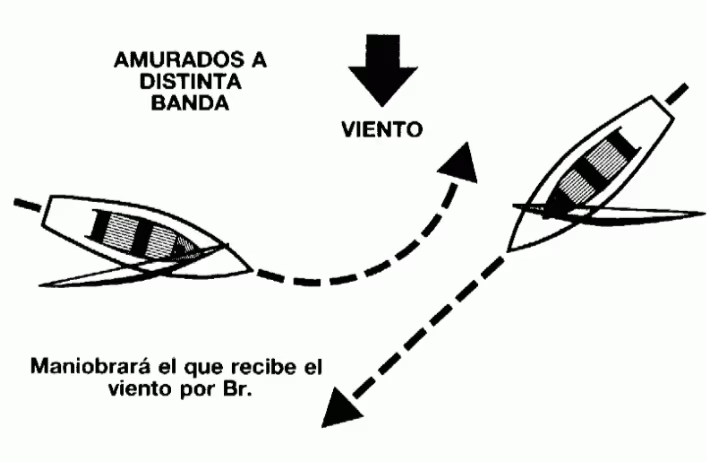
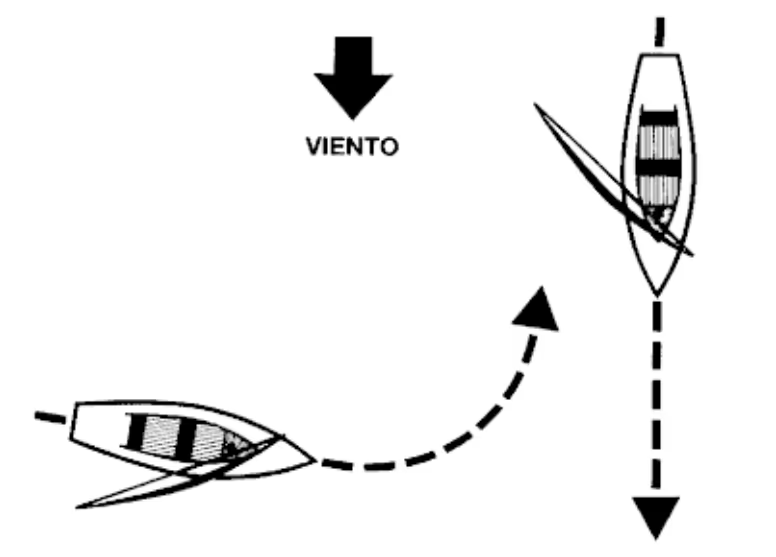
Port tack gives way to starboard tack. When two sailboats are approaching and the wind is on a different side of each boat, the boat with the wind on its port side must give way to the other.
-
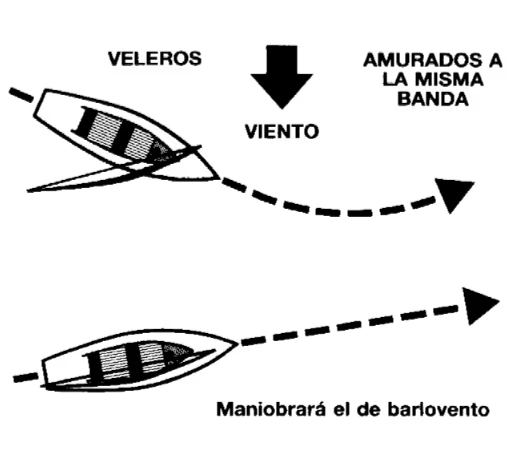
Windward gives way to leeward. When two sailboats are approaching with the wind on the same side, the boat to windward (the side the wind is coming from) must give way to the leeward boat.
-
If there's a collision risk and everything else fails, the boat that has the other boat on its starboard side must give way.
-
Any boat overtaking another must keep clear of the boat being overtaken.
-
A sailboat must always keep clear of any vessel that is:
- Not under command.
- Restricted in its ability to manoeuvre.
- A kayak, paddleboard or swimmer in the water.
-
Non-commercial motorboats usually give way to sailboats — unless the sailboat is overtaking. That said, sailboats should also try to stay clear of larger boats that have a harder time slowing down or changing course, especially in narrow channels.
Common sense must always prevail, and prevention and prudent judgement are essential.